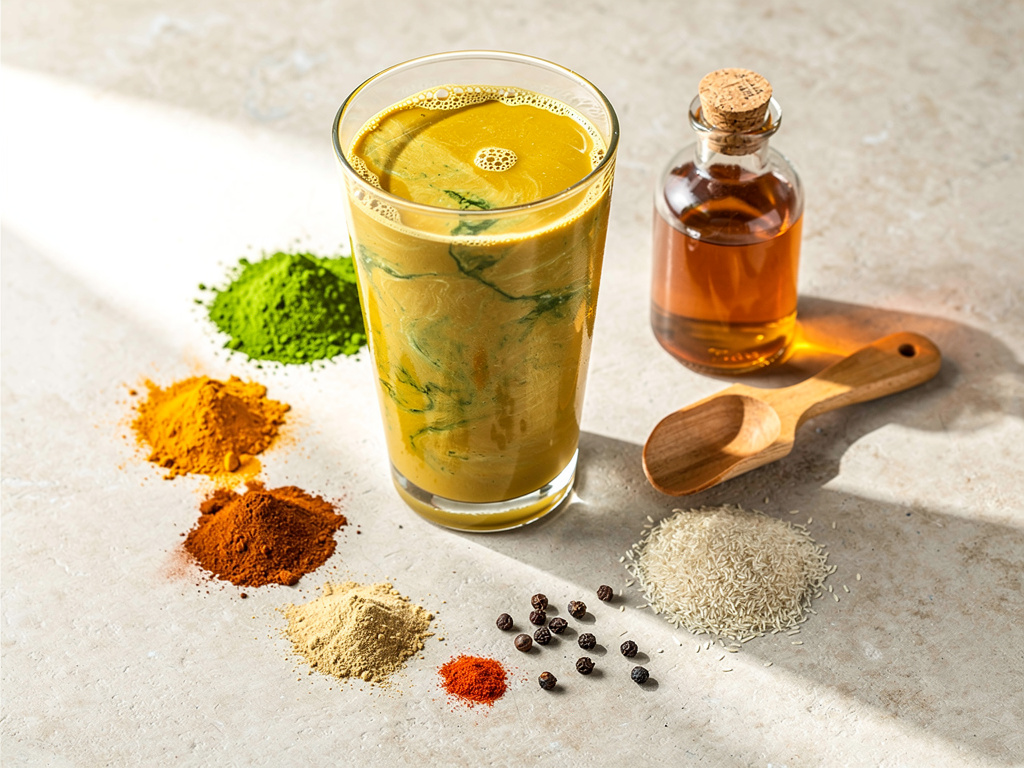
Geordie's Magic Elixir Mixir
A science-backed daily spice and supplement blend — one scoop a day for inflammation, cognition, blood sugar, and more
By Geordie Everitt
A daily drinkable spice, fiber, and matcha blend built from ingredients with strong evidence bases, drawn primarily from the work of Dr. Michael Greger (nutritionfacts.org) and peer-reviewed clinical trials. Mix the 7-day dry batch once; the apple cider vinegar is added fresh to the glass each morning. Take one level scoop (~34 ml) of the dry blend stirred into 250 ml of water with 15 ml of ACV — drink it immediately once mixed.
7-Day Dry Batch
| Ingredient | Per Day | 7-Day Amount |
|---|---|---|
| Ceylon cinnamon | 5 ml (2.6g) | 35 ml (18.2g) |
| Fenugreek (ground) | 2.5 ml (1.8g) | 17.5 ml (12.6g) |
| Ginger (ground) | 2.5 ml (1g) | 17.5 ml (7g) |
| Creatine monohydrate | 4 ml (3g) | 28 ml (21g) |
| Psyllium husk powder | 5 ml (4g) | 35 ml (28g) |
| Matcha powder (ceremonial or culinary grade) | 2.5 ml (2g) | 17.5 ml (14g) |
| Black cumin (ground Nigella sativa) | 1.25 ml (1g) | 9 ml (7g) |
| Turmeric (whole ground spice) | 1.25 ml (0.7g) | 9 ml (4.9g) |
| Cloves (ground) | 1.25 ml (0.5g) | 9 ml (3.5g) |
| Cayenne (ground) | 1.25 ml (0.5g) | 9 ml (3.5g) |
| Black pepper (finely ground) | 0.3 ml (0.2g) | 2 ml (1.4g) |
| Cocoa powder (raw, unsweetened) | 5 ml (3g) | 35 ml (21g) |
| Bay leaf (finely ground) | 2.5 ml (1g) | 17.5 ml (7g) |
Dry batch total: ~149g (~240 ml). Daily dry scoop: ~34 ml (~21.3g).
Daily Glass Add-in
| Ingredient | Per Day | Notes |
|---|---|---|
| Apple cider vinegar | 15 ml (1 tbsp) | Add fresh to the glass; do not store in dry batch |
Instructions
Make the dry batch: Measure all 7-day dry amounts into a clean, dry jar with a tight-fitting lid.
Shake vigorously for 30 seconds to distribute the black pepper, cayenne, and cloves evenly — these are small-volume ingredients and clumping defeats the purpose.
Label the jar with the date. Store in a cool, dark place (spices degrade in light and heat; matcha oxidizes quickly, so use the batch within 7 days).
Daily ritual: Each morning, add 15 ml of apple cider vinegar to 250 ml of warm (not boiling) water — boiling water degrades the catechins in matcha. Stir in one level dry scoop (~34 ml). Drink immediately — the psyllium gels within a few minutes. Chase with an additional 250 ml of plain water.
Tooth protection: Rinse your mouth with plain water after drinking, or use a straw to bypass the teeth. Acetic acid softens enamel temporarily.
A Note on Palatability
Let's be honest: this is not a smoothie. The flavor profile runs from aggressively medicinal to surprisingly tolerable, depending on your relationship with turmeric, cayenne, and the faint but persistent note of fenugreek that lingers like a houseguest who doesn't read signals. The cocoa and cinnamon help. The ACV does not.
Some people genuinely come to enjoy it — the warmth of the ginger and cayenne, the earthiness of the matcha, a kind of savory-bitter complexity that starts making sense after a week or two. Others drink it with the resigned efficiency of someone taking medicine, which is, after all, exactly what this is. Both responses are correct.
Strategies that help: use warm (not hot) water, which softens the sharpness of the ACV and blooms the spices; drink it quickly rather than sipping; chase it immediately with the extra 250 ml of plain water. What doesn't help: thinking about it too much beforehand.
It is, however, good for you. Suck it up, buttercup.
Why Each Ingredient
Ceylon Cinnamon — 5 ml/day (2.6g)
The largest ingredient by volume. Must be Ceylon (Sri Lankan), not cassia. Cassia cinnamon contains coumarin, a hepatotoxin — at 5 ml/day you'd exceed the European Food Safety Authority's tolerable daily intake. Ceylon has negligible coumarin, making daily use safe. Provides antioxidant, anti-inflammatory, and antimicrobial benefits. Note: blood sugar studies mostly used cassia, so don't expect glycemic benefits from Ceylon specifically.
- Greger: The Safer Cinnamon
Fenugreek — 2.5 ml/day (1.8g)
The blood sugar champion. The active compound 4-hydroxyisoleucine stimulates insulin release specifically when blood glucose is elevated. A dozen RCTs confirm glycemic benefits. A 3-year trial (Gaddam et al., 2015, J Diabetes & Metabolic Disorders) showed the non-supplemented group had 4x higher diabetes incidence. Also demonstrated increased upper and lower body strength in resistance-trained males (Poole et al., 2010, J Int Soc Sports Nutrition, 7:34). Side effect: your armpits may smell like maple syrup (sotolone compound).
- Greger: Benefits of Fenugreek Seeds
Ginger — 2.5 ml/day (1g)
A meta-analysis of 8+ randomized, double-blind, placebo-controlled trials supports ginger for pain relief at 1-2g/day. At 0.3 ml, it matched sumatriptan (Imitrex) for migraines without side effects. Effective for osteoarthritis (comparable to ibuprofen), menstrual cramps, nausea (motion sickness, pregnancy, chemo), IBS, and fatty liver disease. One 5 ml dose/day significantly decreased inflammatory markers and liver fat.
- Greger: Ginger for Osteoarthritis
Creatine Monohydrate — 4 ml/day (3g)
Not a spice, but earns its place. Combined with resistance training, 3g/day for 12+ weeks yields ~1.4 kg of additional lean mass and improved measures of muscle function in older adults (creatine plus exercise is recognised in sarcopenia-management guidance). A 2024 meta-analysis (Frontiers in Nutrition) found cognitive benefits for memory, attention, and processing speed, though its conclusions have since been contested. Vegetarians may see greater cognitive benefit (Benton & Donohoe, 2011, British J Nutrition). Important: creatine without exercise does nothing for muscle. Choose high-purity product — an analysis of 33 supplements (Moret et al., 2011) found ~44% exceeded the creatinine contaminant limit.
- Greger: What Is Creatine?
- Greger: Side Effects of Creatine
Psyllium Husk Powder — 5 ml/day (4g)
The most evidence-backed soluble fiber on the market, and the only fiber with an FDA-approved health claim for LDL cholesterol reduction (3.4g/day, taken at least three times daily with meals — this blend delivers the full daily amount in one dose). Psyllium forms a viscous gel in the gut that slows glucose absorption (blunting post-meal blood sugar spikes), traps bile acids for excretion (forcing the liver to pull LDL cholesterol from the blood to make more), and feeds fermentable fiber to the colon microbiome. A 2018 meta-analysis (Jovanovski et al., American Journal of Clinical Nutrition) across 28 RCTs confirmed significant reductions in LDL cholesterol. 4g/day is a meaningful dose — you can scale to 10g if tolerated.
- Greger: Psyllium Topics
Matcha Powder — 2.5 ml/day (2g)
Unlike steeped green tea, matcha suspends the entire ground leaf in the drink — you consume all of the catechins, chlorophyll, and L-theanine rather than a fraction extracted by hot water. The primary active compound is EGCG (epigallocatechin gallate), the most-studied catechin, with antioxidant activity that exceeds vitamin C and E on a per-gram basis. EGCG is associated with reduced risk of several cancers, cardiovascular protection, and improved metabolic markers across multiple prospective cohort studies and RCTs. L-theanine (~30 mg at 2g dose) promotes alpha-wave brain activity — calm, focused alertness — and works synergistically with the caffeine present (~70 mg at 2g). Use water below 80°C; boiling destroys catechins.
- Greger: Green Tea Topics
Black Cumin (Nigella sativa) — 1.25 ml/day (1g)
Dr. Greger's "21 Tweaks" for weight management includes 1/4 tsp black cumin daily. An umbrella review of 20 meta-analyses (Frontiers in Nutrition, 2023, PMC10086143) found mostly low-to-moderate-quality evidence for benefits across 5 cardiometabolic outcomes: LDL cholesterol, blood pressure, triglycerides, blood sugar, and obesity indices. Active compound: thymoquinone. Cost: ~3 cents/day.
- Greger: Benefits of Black Cumin Seed
Turmeric — 1.25 ml/day (0.7g, whole spice)
The only spice with its own slot in Dr. Greger's Daily Dozen. Use whole turmeric powder, not curcumin extract — curcumin is just one of 300+ compounds in the whole root, and megadose curcumin supplements combined with piperine may cause DNA damage at elevated blood levels. At culinary doses, anti-inflammatory effects rival NSAIDs for osteoarthritis and RA in multiple RCTs. Also studied for cancer prevention (breast, colon, pancreas, brain), neuroprotection (Alzheimer's case series, 2012), DNA repair, and colitis.
- Greger: Turmeric Topics
Cloves — 1.25 ml/day (0.5g)
Highest antioxidant concentration (ORAC score) of any spice — a small pinch can double your daily antioxidant intake. In Percival et al. (2012, J Am Coll Nutrition, 31(4):288-294), blood from clove-consuming subjects significantly suppressed TNF-alpha release from white blood cells, the first study to demonstrate that absorbed spice compounds provide systemic anti-inflammatory protection in vivo. A small open-label pilot study also found a polyphenol-rich clove extract lowered pre- and post-prandial blood glucose in healthy and prediabetic volunteers (Mohan et al., 2019).
- Greger: Which Spices Fight Inflammation?
Cayenne — 1.25 ml/day (0.5g)
Capsaicin, the active compound in cayenne, activates TRPV1 receptors in a way that produces thermogenic and anti-inflammatory effects. Multiple RCTs and meta-analyses support capsaicin for increased energy expenditure, reduced appetite, and improved lipid profiles. A 2014 meta-analysis (Whiting et al., Appetite) found that pre-meal capsaicinoids significantly reduced energy intake — by roughly 74 kcal per meal — and a 2017 review (Zheng et al., Bioscience Reports) summarizes the thermogenic mechanisms. At 0.5g/day of ground cayenne (roughly 2–4 mg capsaicin), these effects appear without requiring the high-dose capsule formulations used in some trials. Capsaicin also inhibits NF-κB inflammatory signaling, complementing the anti-inflammatory action of turmeric, ginger, and cloves already in the blend.
- Greger: Capsaicin Topics
Black Pepper — 0.3 ml/day (0.2g)
The catalyst. Just 0.25 ml boosts curcumin absorption by 2,000% (Shoba et al., 1998, Planta Medica). Piperine inhibits the glucuronidation (UGT) enzymes and CYP3A4-mediated metabolism that normally clear curcumin from the bloodstream. Also enhances carotenoid absorption from vegetables. You need very little.
Cocoa Powder (raw, unsweetened) — 5 ml/day (3g)
Raw unsweetened cocoa powder is among the most concentrated dietary sources of flavan-3-ol flavanoids — specifically epicatechin and catechin, the same class of compounds in green tea. The 2022 COSMOS trial (Sesso et al., American Journal of Clinical Nutrition), a large RCT of 21,000+ US adults, found cocoa flavanol supplementation cut cardiovascular deaths by 27% — though this was a secondary endpoint; the primary endpoint (total cardiovascular events) did not reach statistical significance. At the meta-analysis level, Hooper et al. (2012, American Journal of Clinical Nutrition, 42 RCTs) confirmed cocoa flavanols improve blood pressure, flow-mediated dilation, and insulin sensitivity. Epicatechin specifically activates mitochondrial biogenesis via AMPK and Nrf2 pathways — a mechanism shared with aerobic exercise. Use raw (non-Dutched) cocoa powder: Dutch processing destroys up to 90% of the flavanols through alkalization. Natural or raw cacao powder is acidic and retains full polyphenol content. At 3g/day the dose is well within culinary range and adds a mild chocolate depth that partially offsets the bitterness of the turmeric and cayenne.
- Greger: Cocoa Topics
Bay Leaf — 2.5 ml/day (1g)
The newest addition, and the smallest-evidence-base ingredient here by trial count — one placebo-controlled RCT, but a well-designed one. Khan, Zaman & Anderson (2009, J Clin Biochem Nutrition) gave 40 people with type 2 diabetes capsules of 1, 2, or 3 g/day of ground bay leaf for 30 days. Fasting glucose fell 21–26% at every dose. Total cholesterol and LDL fell significantly at every dose too (20–24% and 32–40%). HDL and triglycerides only improved significantly at the 1g and 2g doses — the 3g arm lost that benefit. This blend uses 1g/day, the smallest dose in the trial that still captured every outcome. It's one study, unreplicated at this size in the years since, so the evidence grade here is honestly lower than fenugreek or psyllium's — promising, not settled.
- Khan A, Zaman G, Anderson RA (2009). Bay Leaves Improve Glucose and Lipid Profile of People with Type 2 Diabetes. J Clin Biochem Nutr, 44(1):52–56.
Apple Cider Vinegar — 15 ml/day (1 tbsp)
Acetic acid, the active compound in vinegar, slows gastric emptying and inhibits disaccharidase enzymes in the small intestine — the same mechanism as the diabetes drug acarbose. This blunts the post-meal glucose spike independently of the blood-sugar-lowering spices already in the blend. Johnston et al. (2004, Diabetes Care) found ~20 ml of vinegar improved whole-body insulin sensitivity by 34% in insulin-resistant subjects and 19% in those with type 2 diabetes (insulin-sensitive controls saw no significant change). A 12-week RCT (Kondo et al., 2009, Bioscience, Biotechnology, and Biochemistry) found 15–30 ml/day significantly reduced BMI, visceral fat, and serum triglycerides. Do not store vinegar in the dry batch — it will destabilize the psyllium and react with the chemistry of some spices over 7 days.
- Greger: Vinegar Topics
Safety and Interactions
- Prescription medications: Black pepper's piperine boosts drug bioavailability (the "grapefruit effect"). If you take Dilantin, Inderal, theophylline, or other medications, consult your doctor.
- Psyllium and medications: Psyllium can reduce absorption of any medication taken at the same time. Take this blend at least 2 hours before or after any prescription drugs.
- Caffeine: 2g of matcha delivers ~70 mg of caffeine. Avoid if caffeine-sensitive, pregnant, or taking MAO inhibitors. Take in the morning, not before sleep.
- Iron absorption: The EGCG in matcha inhibits non-heme iron absorption. If you take iron supplements or have iron-deficiency anaemia, separate matcha from iron by at least 2 hours.
- Blood thinners: Cloves (eugenol), turmeric, cayenne (capsaicin), and matcha (vitamin K) all affect clotting. Caution with anticoagulants or aspirin; matcha's vitamin K is specifically relevant for warfarin.
- Diabetes medications: Fenugreek, black cumin, cloves, ginger, bay leaf, and ACV all lower blood sugar — the combined effect with insulin or oral diabetes drugs can cause hypoglycemia. Monitor levels closely.
- Tooth enamel: Always dilute ACV; never drink it straight. Rinse mouth with water after, or use a straw.
- GI sensitivity: Cayenne at 0.5g/day is a meaningful dose for people with GERD, acid reflux, or IBS. ACV may also aggravate reflux symptoms. Reduce or omit either if they cause discomfort.
- Psyllium and water: Always take with at least 250 ml of liquid. Psyllium taken with insufficient water can swell in the throat and cause choking. Drink immediately after mixing.
- Pregnancy: Consult your doctor before daily use. Turmeric at high doses, fenugreek, and caffeine (matcha) all have specific pregnancy cautions.
- Kidney stones: Turmeric is high in oxalates — moderate intake if you're susceptible.
- Gallstones: Turmeric may aggravate gallbladder issues.
- Creatine and lab tests: Creatine supplementation raises blood creatinine, which can falsely indicate kidney damage. Tell your doctor to use cystatin C for kidney function assessment instead.
- Never use clove essential oil internally — concentrated eugenol can cause seizures and liver damage. Ground cloves at culinary doses are safe.
Sourcing Notes
- Ceylon cinnamon: Must say "Ceylon" on the label (in the US, generic "cinnamon" is usually cassia). Check the supplier.
- Black cumin: Look for Nigella sativa specifically — not to be confused with regular cumin or black sesame.
- Cayenne: Standard ground cayenne from any spice supplier works. Higher SHU ratings mean more capsaicin per gram — if using a hotter variety, reduce the dose accordingly.
- Psyllium: Use psyllium husk powder (finely ground), not whole husks — powder disperses more evenly in the dry blend and mixes more smoothly into water. Check for a high husk percentage (95%+).
- Matcha: Ceremonial grade has higher catechin content and a more pleasant flavour; culinary grade works fine at this dose. Look for Japanese-origin matcha (Uji, Nishio, or Yame regions). Avoid Chinese-origin "matcha" — lead contamination is a documented concern with Chinese green tea powders.
- Apple cider vinegar: Raw, unfiltered ACV with "the mother" is conventional, though the clinical evidence doesn't distinguish between filtered and unfiltered. Either works; the acetic acid content is what matters.
- Creatine: Choose a brand tested for purity (ConsumerLab rated BulkSupplements well, ~$0.10/day at 3g).
- Bay leaf: Buy whole dried bay leaves and grind them yourself (a spice grinder or mortar and pestle), or buy pre-ground bay leaf powder from a high-turnover spice source. Crumbled whole-leaf bay (the kind sold for soups) is far less dense than finely ground powder — measuring crumbled leaf by volume will under-dose you badly, so weigh to 1g if you're unsure of your grind.
- All spices: Buy whole and grind yourself for maximum potency, or buy ground from a high-turnover source.
References
Each reference links to the primary source on PubMed, PMC, or the publisher. Reviewed and verified July 2026; bay leaf added August 2026.
- Sahebkar A, Beccuti G, Simental-Mendía LE, et al. (2016). Nigella sativa (black seed) effects on plasma lipid concentrations in humans: a systematic review and meta-analysis of randomized placebo-controlled trials. Pharmacological Research, 106:37–50. PubMed
- Sahebkar A, Soranna D, Liu X, et al. (2016). A systematic review and meta-analysis of randomized controlled trials investigating the effects of supplementation with Nigella sativa on blood pressure. Journal of Hypertension, 34(11):2127–2135. PubMed
- Daryabeygi-Khotbehsara R, Golzarand M, Ghaffari MP, Djafarian K (2017). Nigella sativa improves glucose homeostasis and serum lipids in type 2 diabetes: a systematic review and meta-analysis. Complementary Therapies in Medicine, 35:6–13. PubMed
- Li Z, Wang Y, Xu Q, et al. (2023). Nigella sativa and health outcomes: an overview of systematic reviews and meta-analyses. Frontiers in Nutrition, 10:1107750. PMC
- Shoba G, Joy D, Joseph T, et al. (1998). Influence of piperine on the pharmacokinetics of curcumin in animals and human volunteers. Planta Medica, 64(4):353–356. PubMed
- Gaddam A, Galla C, Thummisetti S, et al. (2015). Role of Fenugreek in the prevention of type 2 diabetes mellitus in prediabetes. Journal of Diabetes & Metabolic Disorders, 14:74. PubMed
- Poole C, Bushey B, Foster C, et al. (2010). The effects of a commercially available botanical supplement on strength, body composition, power output, and hormonal profiles in resistance-trained males. Journal of the International Society of Sports Nutrition, 7:34. PubMed
- Percival SS, Vanden Heuvel JP, Nieves CJ, et al. (2012). Bioavailability of herbs and spices in humans as determined by ex vivo inflammatory suppression and DNA strand breaks. Journal of the American College of Nutrition, 31(4):288–294. PubMed
- Mohan R, Jose S, Mulakkal J, et al. (2019). Water-soluble polyphenol-rich clove extract lowers pre- and post-prandial blood glucose levels in healthy and prediabetic volunteers: an open-label pilot study. BMC Complementary and Alternative Medicine, 19:99. PubMed
- Benton D, Donohoe RA (2011). The influence of creatine supplementation on the cognitive functioning of vegetarians and omnivores. British Journal of Nutrition, 105(7):1100–1105. PubMed
- Xu C, Bi S, Zhang W, Luo L (2024). The effects of creatine supplementation on cognitive function in adults: a systematic review and meta-analysis. Frontiers in Nutrition, 11:1424972. PubMed (note: conclusions have been contested in published commentary)
- EFSA Panel on Food Additives, Flavourings, Processing Aids and Materials in Contact with Food (2004). Opinion related to creatine monohydrate for use in foods for particular nutritional uses. EFSA Journal, 2(4):36. doi:10.2903/j.efsa.2004.36
- Moret S, Prevarin A, Tubaro F (2011). Levels of creatine, organic contaminants and heavy metals in creatine dietary supplements. Food Chemistry, 126(3):1232–1238. doi:10.1016/j.foodchem.2010.12.028
- Zheng J, Zheng S, Feng Q, Zhang Q, Xiao X (2017). Dietary capsaicin and its anti-obesity potency: from mechanism to clinical implications (narrative review). Bioscience Reports, 37(3):BSR20170286. PubMed
- Whiting S, Derbyshire E, Tiwari BK (2014). Could capsaicinoids help to support weight management? A systematic review and meta-analysis of energy intake data. Appetite, 73:183–188. PubMed
- Jovanovski E, Yashpal S, Komishon A, et al. (2018). Effect of psyllium (Plantago ovata) fiber on LDL cholesterol and alternative lipid targets: a systematic review and meta-analysis of randomized controlled trials. American Journal of Clinical Nutrition, 108(5):922–932. PubMed
- Johnston CS, Kim CM, Buller AJ (2004). Vinegar improves insulin sensitivity to a high-carbohydrate meal in subjects with insulin resistance or type 2 diabetes. Diabetes Care, 27(1):281–282. PubMed
- Kondo T, Kishi M, Fushimi T, Ugajin S, Kaga T (2009). Vinegar intake reduces body weight, body fat mass, and serum triglyceride levels in obese Japanese subjects. Bioscience, Biotechnology, and Biochemistry, 73(8):1837–1843. PubMed
- Weiss DJ, Anderton CR (2003). Determination of catechins in matcha green tea by micellar electrokinetic chromatography. Journal of Chromatography A, 1011(1-2):173–180. PubMed
- Sesso HD, Manson JE, Aragaki AK, et al. (2022). Effect of cocoa flavanol supplementation for the prevention of cardiovascular disease events: the COSMOS randomized clinical trial. American Journal of Clinical Nutrition, 115(6):1490–1500. PubMed
- Hooper L, Kay C, Abdelhamid A, et al. (2012). Effects of chocolate, cocoa, and flavan-3-ols on cardiovascular health: a systematic review and meta-analysis of randomized trials. American Journal of Clinical Nutrition, 95(3):740–751. PubMed
- Khan A, Zaman G, Anderson RA (2009). Bay leaves improve glucose and lipid profile of people with type 2 diabetes. Journal of Clinical Biochemistry and Nutrition, 44(1):52–56. PubMed