Recipe
Shiitake Miso Soup
A hearty, oil-free miso soup loaded with shiitake mushrooms, buckwheat soba, edamame, and tofu — real comfort food with 8g of fiber per serving
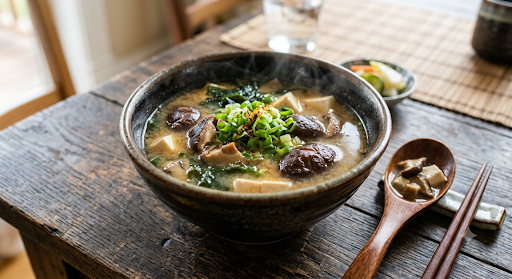
Ingredients
For the Broth:
- 1.5 L water
- 1 piece kombu (dried kelp), about 10x10 cm (optional — see the kombu-free version below)
- 30g dried shiitake mushrooms
- 2.5 cm piece fresh ginger, sliced
- 3 cloves garlic, smashed
For the Soup:
- 200g fresh shiitake mushrooms, sliced (save the stems if making the kombu-free broth below)
- 125g daikon radish, thinly sliced
- 150g napa cabbage, chopped
- 150g shelled edamame
- 200g firm tofu, cubed
- 10g dried wakame seaweed
- 100g soba noodles (look for 100% buckwheat if you want this gluten-free — many blends include wheat)
To Finish:
- 150g white or yellow miso paste
- 3 green onions, thinly sliced
- 15 ml low-sodium tamari (optional, to taste)
Instructions
Make the dashi: Combine the water, kombu, and dried shiitake mushrooms in a large pot. Let soak 20 minutes (or overnight in the fridge for deeper flavor), then bring to a gentle simmer over medium heat. Pull the kombu out just before it boils — boiling makes it slimy and bitter. Add the ginger and garlic, simmer 10 minutes, then strain the broth, reserving the rehydrated dried shiitakes (slice them and set aside; discard the kombu, ginger, and garlic).
Cook the vegetables: Return the strained broth to the pot. Add the fresh shiitake mushrooms, daikon, and the sliced rehydrated dried shiitakes. Simmer 8-10 minutes, until the daikon is tender.
Add the soba: Add the soba noodles directly to the pot. Simmer according to the package time, usually 4-5 minutes, until just tender.
Add the quick-cooking ingredients: Stir in the napa cabbage, edamame, tofu, and wakame. Simmer 2-3 minutes, just until the cabbage wilts and everything is heated through.
Temper the miso: Remove the pot from the heat — boiling miso kills its beneficial enzymes and turns it bitter. Ladle a little hot broth into a small bowl, whisk in the miso paste until smooth, then stir that mixture back into the pot.
Serve: Ladle into bowls, top with sliced green onions, and add a splash of tamari if you like it saltier.
No Kombu? Use Shiitake Stems Instead
Kombu adds depth, but it isn't required — fresh shiitake alone make a legitimate broth if you use the stems. Before slicing your fresh shiitake for the soup, pull off the stems and set them aside (they're too woody to eat, but great for broth).
Skip the kombu and dried shiitake in step 1. Instead, simmer the reserved stems in the water for 25-30 minutes — longer than the kombu method, since the stems alone are doing all the umami work. Strain them out, then continue with step 2 as written, using the sliced fresh shiitake caps.
Why This Works
Traditional miso soup is mostly broth — barely a gram of fiber a bowl. This version is built to actually feed you:
- Shiitake mushrooms (dried and fresh): one of the few mushrooms with meaningful fiber, and the backbone of the umami here instead of oil
- Soba noodles: a whole-grain base that turns this into a full meal instead of a side dish
- Edamame: whole soybeans add fiber and protein that miso paste alone can't
- Daikon radish and napa cabbage: bulk and crunch for almost no calories
- Wakame seaweed: a classic miso soup ingredient that also happens to be genuinely fiber-rich
No oil anywhere in this recipe: the dashi comes from kombu and dried shiitake, not oil-sautéed aromatics, and miso itself is just fermented soybeans, salt, and koji.
Total fiber per serving: 8g — a real number for a bowl of soup, not a garnish of fiber on top of broth.